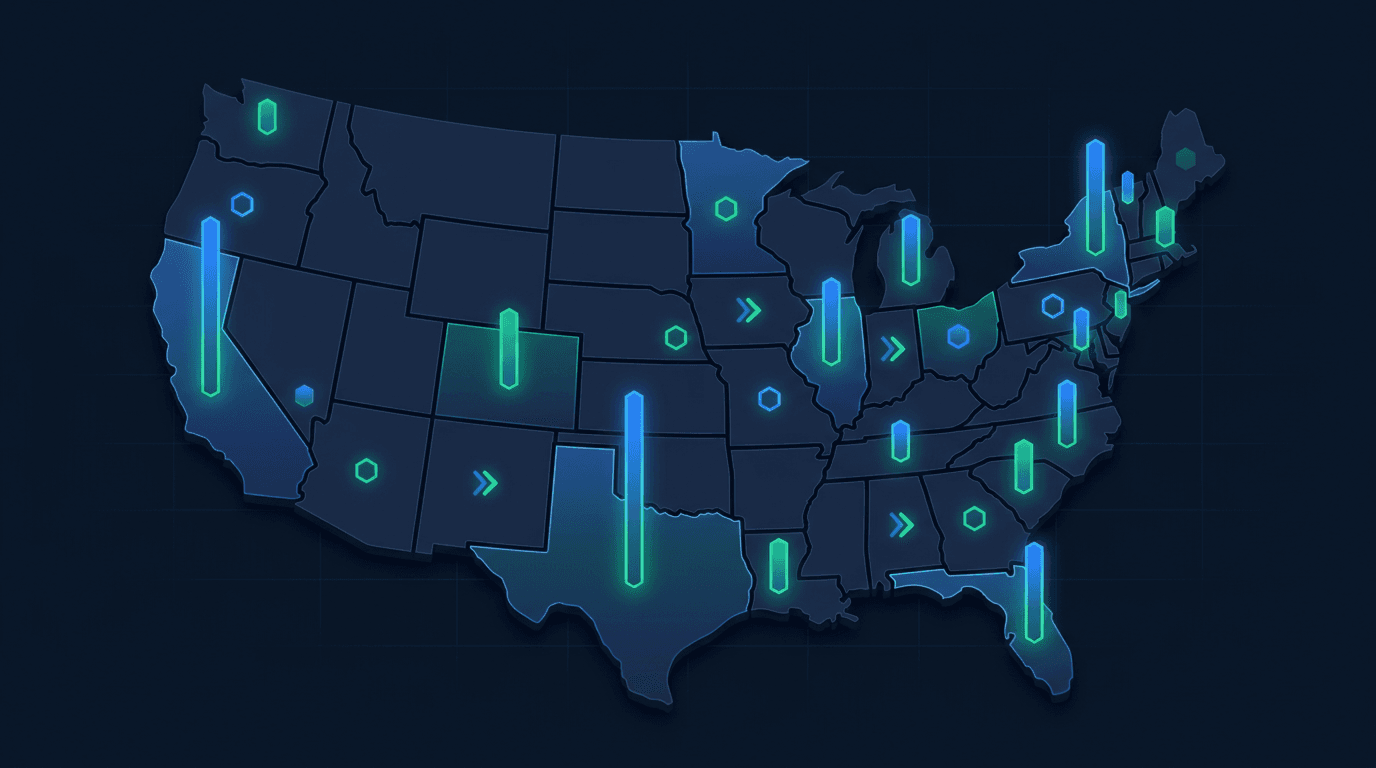
Not all states produce equal ACA open enrollment lead volume. The top states for ACA enrollment are determined by population size, uninsured rates, marketplace type, Medicaid expansion status, and subsidy eligibility levels. Understanding these factors helps agents and agencies target the most productive markets for health insurance lead generation in 2026.
In this analysis, we rank the top 10 states by ACA marketplace enrollment volume and explore the factors that drive lead availability and cost across the country.
The ACA Enrollment Landscape in 2026
The ACA marketplace continues to grow, with total enrollment exceeding 21 million for the 2026 plan year according to the Centers for Medicare and Medicaid Services (CMS). This growth is driven by enhanced premium tax credits extended through 2025 legislation, increased consumer awareness, and expanded outreach efforts by states and navigators.
Key national enrollment statistics for 2026:
- Total marketplace enrollment: 21.4 million (up from 21.3 million in 2025)
- Federal marketplace (HealthCare.gov) enrollment: 16.8 million across 31 states
- State-based marketplace enrollment: 4.6 million across 19 states plus DC
- Percentage receiving subsidies: 92% of enrollees receive premium tax credits
- Average monthly premium after subsidies: $92
For agents selling ACA health insurance leads, these numbers represent an enormous addressable market, but the opportunity varies dramatically by state.
Top 10 States for ACA Lead Volume
Based on 2026 open enrollment data, here are the top 10 states by total marketplace enrollment:
| Rank | State | 2026 Enrollment | YoY Growth | Marketplace Type | Avg. Lead Cost |
|---|---|---|---|---|---|
| 1 | Florida | 3.58M | +2.1% | Federal | $18-$28 |
| 2 | Texas | 2.85M | +3.4% | Federal | $15-$25 |
| 3 | California | 1.92M | +1.8% | State (Covered CA) | $20-$32 |
| 4 | Georgia | 1.23M | +4.2% | Federal | $14-$22 |
| 5 | North Carolina | 1.05M | +3.8% | Federal | $13-$22 |
| 6 | Pennsylvania | 0.68M | +2.5% | State (Pennie) | $14-$25 |
| 7 | Virginia | 0.62M | +2.9% | Federal | $15-$24 |
| 8 | New Jersey | 0.58M | +1.6% | State (GetCoveredNJ) | $18-$28 |
| 9 | Illinois | 0.55M | +2.3% | Federal | $14-$23 |
| 10 | South Carolina | 0.51M | +4.5% | Federal | $12-$20 |
Florida alone accounts for nearly 17% of all ACA marketplace enrollment nationally. Combined, the top 10 states represent over 60% of total enrollment, making them the primary markets for open enrollment leads.
State vs. Federal Marketplace Impact on Leads
Whether a state operates its own marketplace or uses the federal HealthCare.gov platform significantly impacts lead dynamics:
Federal Marketplace States (31 states)
States using HealthCare.gov benefit from centralized marketing and enrollment infrastructure. Lead generation for these states is streamlined because consumers follow a standardized process. However, these states often have less state-specific consumer education, meaning agents play a more critical role in guiding enrollment.
State-Based Marketplace States (19 states + DC)
States like California (Covered California), New York (NY State of Health), and Pennsylvania (Pennie) operate their own exchanges. These states typically invest more in local marketing and outreach, creating higher consumer awareness but also more competition from navigators and state-funded enrollment assisters.
The lead generation opportunity differs between marketplace types:
| Factor | Federal Marketplace | State Marketplace |
|---|---|---|
| Consumer Awareness | Moderate | Higher (state marketing) |
| Agent Role | Critical (less state support) | Competitive (navigators active) |
| Lead Costs | Generally lower | Generally higher |
| Enrollment Window | Standard OEP | May have extended OEP |
How Medicaid Expansion Affects Lead Volume
Medicaid expansion status has a direct impact on ACA marketplace lead volume. As of 2026, 40 states plus DC have expanded Medicaid under the ACA. The remaining 10 non-expansion states channel more residents to the marketplace because people earning 100-138% of the federal poverty level must use marketplace plans instead of Medicaid.
The impact is significant: states like Texas, Georgia, and Florida that have not fully expanded Medicaid have disproportionately high marketplace enrollment because more lower-income residents qualify for subsidized marketplace plans rather than Medicaid. According to the KFF Medicaid expansion tracker, non-expansion states account for approximately 40% of all marketplace enrollment despite representing only about 30% of the national population.
This means agents in non-expansion states have access to larger marketplace lead pools relative to their population size.
Complete Enrollment Data by State
Here is a broader look at ACA marketplace enrollment across key states for agent reference:
| State | Enrollment | % Subsidized | Medicaid Expanded? |
|---|---|---|---|
| Florida | 3,580,000 | 94% | No |
| Texas | 2,850,000 | 93% | No |
| California | 1,920,000 | 89% | Yes |
| Georgia | 1,230,000 | 95% | Partial |
| North Carolina | 1,050,000 | 93% | Yes (2024) |
| Pennsylvania | 680,000 | 90% | Yes |
| Virginia | 620,000 | 91% | Yes |
| New Jersey | 580,000 | 88% | Yes |
| Illinois | 550,000 | 90% | Yes |
| South Carolina | 510,000 | 94% | No |
| Ohio | 420,000 | 91% | Yes |
| Michigan | 395,000 | 90% | Yes |
Seasonal Lead Patterns and Timing
ACA lead volume follows a predictable seasonal pattern tied to enrollment windows:
- Open Enrollment Period (November 1 - January 15): 70-80% of annual marketplace enrollment occurs during OEP. Lead volume peaks in late November through mid-December. Lead costs are highest during this window due to peak demand.
- Special Enrollment Periods (year-round): Qualifying life events like job loss, marriage, birth, and relocation create year-round SEP lead opportunities. These leads are lower volume but often higher quality because prospects have immediate coverage needs.
- Medicaid Unwinding (ongoing through 2026): Continued Medicaid redeterminations are transitioning millions of people to marketplace coverage, creating an extended wave of ACA leads beyond the traditional OEP window.
Smart agents begin building their ACA lead pipeline in September, ramp up aggressively from November through December, and maintain SEP lead flow year-round through state-targeted lead programs.
Strategies for Top ACA Lead Markets
To maximize results in the top ACA lead states, apply these proven strategies:
- Focus on subsidy education: With 92% of enrollees receiving subsidies, your value proposition is helping consumers understand their true cost after tax credits. Many prospects do not realize they qualify for $0 or near-$0 premiums.
- Target non-expansion states first: Florida, Texas, Georgia, and South Carolina offer the highest marketplace enrollment volumes relative to population. These markets have more consumers who need agent assistance.
- Build year-round SEP systems: Do not treat ACA as seasonal-only. Special enrollment period leads convert at higher rates because prospects have immediate needs. Maintain a steady lead flow through SEP-focused campaigns.
- Cross-sell to ACA clients: Health insurance enrollees often need life insurance, dental, vision, and supplemental coverage. Use ACA enrollment as an entry point for multi-product relationships.
- Use aged leads post-OEP: After open enrollment, aged ACA leads become available at 50-70% discounts. Many of these prospects still need coverage through SEP pathways or simply procrastinated during OEP.
Frequently Asked Questions
Which state has the most ACA marketplace enrollees?
Florida leads all states with 3.58 million marketplace enrollees for the 2026 plan year, followed by Texas with 2.85 million and California with 1.92 million. Florida's large enrollment is driven by its population size, older demographic profile, and non-expansion of Medicaid.
Why do some states have higher ACA enrollment than others?
ACA enrollment volume is driven by population size, uninsured rate, Medicaid expansion status, marketplace type, and state-level marketing efforts. Non-expansion states tend to have higher marketplace enrollment because more low-income residents must use marketplace plans instead of Medicaid.
When is the best time to buy ACA leads?
The highest lead volume occurs during open enrollment (November 1 through January 15), but lead costs are also highest during this period. Savvy agents secure lead commitments 30-60 days before OEP begins and supplement with SEP leads year-round for consistent pipeline flow.
Are ACA leads worth buying outside of open enrollment?
Yes. Special enrollment period leads are available year-round and often convert at higher rates than OEP leads because prospects have an immediate qualifying event and coverage need. SEP lead costs are typically 20-30% lower than peak OEP pricing.
How do state-based marketplaces affect lead generation?
State-based marketplaces like Covered California and NY State of Health invest heavily in consumer outreach and navigator programs, which increases consumer awareness but also creates more competition for agents. Lead costs in state marketplace states tend to be 10-20% higher than in federal marketplace states.
Ready to capture ACA enrollment leads in the top states? Browse ACA lead options on InsureLeads or explore our open enrollment lead programs to prepare for the next enrollment season.