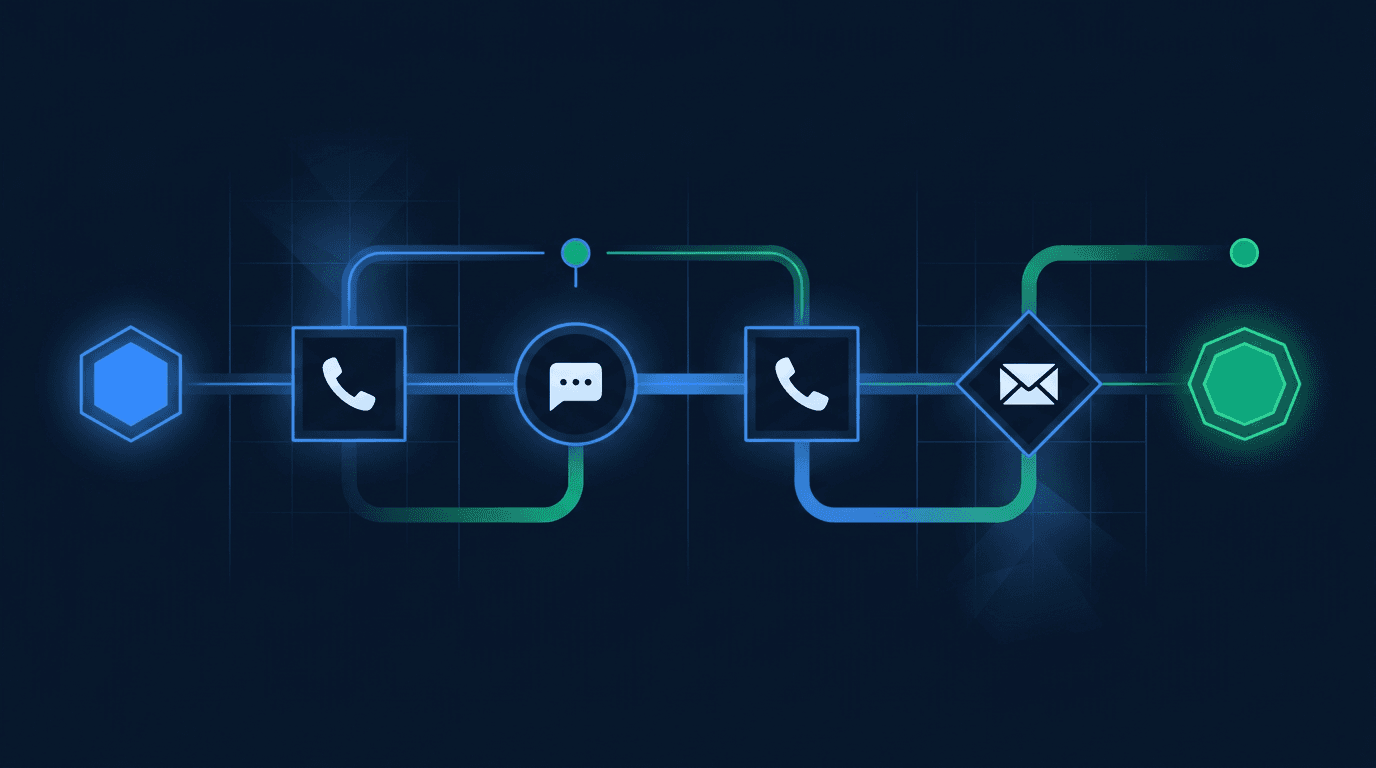
The most expensive mistake insurance agents make is not buying bad leads -- it is failing to follow up on good ones. Research consistently shows that 80% of insurance sales require 5 or more follow-up contacts, yet the average agent gives up after just 1.3 attempts. That gap between what it takes and what most agents do represents an enormous opportunity for those willing to build systematic insurance lead follow up sequences.
According to a 2025 study by the Life Insurance and Market Research Association (LIMRA), agents who implement structured multi-channel follow-up sequences close 25-35% more policies from the same lead volume compared to agents who rely on ad-hoc follow-up. The leads are not the problem. The follow-up is.
In this guide, we provide complete, copy-and-paste follow-up sequences including exact timing, call scripts, text templates, and email templates. These are the same sequences used by agents writing 40+ policies per month from purchased leads.
Why Follow-Up Is Everything in Insurance Sales
Here is why systematic insurance lead follow up is the highest-ROI activity in your business:
- Only 2-5% of leads buy on the first contact. The vast majority need time to compare options, discuss with family members, review their budget, and build trust with you before committing.
- Your competitors stop early. If 90% of agents quit after 2 attempts, being the agent who makes attempt 5 means you have the prospect to yourself. The competition has already given up.
- Each touchpoint builds trust. A prospect who hears from you 5 times across phone, text, and email perceives you as more professional and committed than an agent who called once and disappeared.
- Lead cost is already paid. You paid $20-$50 for that lead whether you follow up once or seven times. Every additional touchpoint is essentially free -- your only investment is the time it takes.
The data is clear. HubSpot research found that companies with structured follow-up processes generate 50% more sales-ready leads at 33% lower cost per lead. In insurance, where lead quality is variable and timing is unpredictable, follow-up is your competitive advantage.
The Multi-Channel Approach: Call, Text, Email
The most effective follow-up uses multiple communication channels. Different prospects prefer different channels, and using all three ensures you reach them on their preferred medium:
| Channel | Response Rate | Best For | TCPA Considerations |
|---|---|---|---|
| Phone Call | 15 - 25% pickup rate | Initial contact, quoting, closing | Requires prior express consent for marketing calls; written consent for autodialed calls |
| Text Message | 35 - 50% response rate | Appointment reminders, quick updates, initial outreach | Requires prior express written consent; must include opt-out mechanism |
| 10 - 20% open rate | Quote summaries, detailed information, long-term nurturing | CAN-SPAM compliant; must include unsubscribe option |
Text messaging has the highest response rate but requires careful TCPA compliance. Always ensure your lead provider captures proper consent for text messaging before you send that first text. For more on converting leads across all channels, see our complete lead conversion guide.
The Complete 14-Day Follow-Up Sequence
This is the core follow-up sequence used by top-producing insurance agents. It includes 9 touchpoints across 3 channels over 14 days. Customize the content for your specific insurance vertical, but keep the timing and channel mix consistent:
| Day | Channel | Purpose | Time of Day |
|---|---|---|---|
| Day 0 (Lead arrives) | Text + Phone | Immediate outreach. Text first, then call within 60 seconds. | Immediately |
| Day 0 (Post-call) | Quote summary or introduction email if no contact. | Within 1 hour of call attempt | |
| Day 1 | Phone | Second call attempt at a different time of day. | Opposite time from Day 0 |
| Day 2 | Text | Value-add message with specific savings or benefit info. | 10 AM - 12 PM |
| Day 4 | Phone | Third call attempt. Voicemail with specific hook. | 2 PM - 5 PM |
| Day 5 | Educational content or comparison resource. | 8 AM - 10 AM | |
| Day 7 | Text | Soft check-in with question to prompt response. | 11 AM - 1 PM |
| Day 10 | Social proof: testimonial or review from similar client. | 8 AM - 10 AM | |
| Day 14 | Text | Final check-in. No-pressure close or graceful exit. | 10 AM - 12 PM |
This sequence generates 25-35% additional sales beyond what you close on the initial call. Agents who skip follow-up are leaving one-third of their potential revenue on the table.
Call Scripts for Follow-Up Attempts
Follow-Up Call #1 (Day 1)
"Hi [Name], this is [Your Name] from [Agency]. I tried reaching you yesterday about the insurance quote you requested. I have some great options for you and it will only take about 5 minutes. Is now a good time, or would later today work better?"
Follow-Up Call #2 (Day 4)
"Hi [Name], [Your Name] here. I have been working on finding you the best rate for your [auto/home/life] insurance. I found an option that could save you [estimated amount] per month. I would love to share it with you -- what is the best time for a quick 5-minute call?"
Voicemail Script (Any Attempt)
"Hi [Name], this is [Your Name] from [Agency], calling about the insurance quote you requested. I found some competitive rates I would like to share with you. You can reach me directly at [phone number]. I will also send you a text with my contact info. Looking forward to connecting."
Key principles for follow-up calls:
- Always reference the original request -- remind them they asked for a quote
- Lead with value -- mention savings, benefits, or specific information you have for them
- Give them an easy next step -- suggest a specific time or ask an easy yes/no question
- Keep voicemails under 30 seconds -- longer messages get skipped
Text Message Templates
Initial Text (Day 0 - Before Calling)
"Hi [Name], this is [Your Name] with [Agency]. I am calling you now about the insurance quote you requested. Looking forward to helping you save!"
Value-Add Text (Day 2)
"Hi [Name], just a heads up -- I found a rate for your [auto/home] insurance that could save you $[amount]/month. Want me to send over the details? -[Your Name]"
Soft Check-In (Day 7)
"Hi [Name], still have your insurance quote ready. Are you still looking for coverage, or have you already found something? Either way, happy to help. -[Your Name]"
Final Text (Day 14)
"Hi [Name], last check-in on your insurance quote. If the timing is not right, no worries at all. I am here whenever you are ready. -[Your Name] [Agency] [Phone]"
Text messaging best practices:
- Keep messages under 160 characters when possible to avoid splitting into multiple texts
- Always identify yourself -- never send anonymous texts
- Include an easy response option -- "reply YES for details" reduces friction
- Respect opt-outs immediately -- if someone says "stop" or "unsubscribe," remove them without argument
Email Templates That Get Responses
Introduction Email (Day 0 - If No Phone Contact)
Subject: Your [Auto/Home/Life] Insurance Quote from [Agency]
"Hi [Name],
Thanks for requesting an insurance quote. I am [Your Name], a licensed agent with [Agency], and I am here to help you find the best coverage at the best price.
I have already started pulling rates from our carrier partners. To finalize your personalized quote, I just need 5 minutes of your time for a quick phone call.
What works better for you -- a call this afternoon or tomorrow morning?
Best,
[Your Name]
[Phone] | [Email]
[Agency]"
Quote Follow-Up Email (Day 5)
Subject: Saving $[Amount]/Year on Your Insurance
"Hi [Name],
I wanted to follow up on the insurance quote we discussed. Based on your information, I have found options that could save you approximately $[amount] per year compared to average rates in your area.
Here is a quick summary of what I found:
- Option A: [Brief description] - $[X]/month
- Option B: [Brief description] - $[Y]/month
Both include [key coverage highlights]. I am happy to walk you through the details in a quick 5-minute call.
Best,
[Your Name]"
Social Proof Email (Day 10)
Subject: How [Client First Name] Saved $[Amount] on Insurance
"Hi [Name],
I recently helped a client in [similar area/situation] save $[amount] per year by switching their [auto/home] insurance. They had been with their previous carrier for [X] years and did not realize how much rates had changed.
I would love to do the same analysis for you. It takes about 5 minutes and there is absolutely no obligation.
Would [day] or [day] work for a quick call?
Best,
[Your Name]"
Timing and Cadence: When to Reach Out
When you call matters almost as much as whether you call. Here are the optimal timing windows based on insurance industry data and Salesforce research:
- Best days to call: Tuesday, Wednesday, and Thursday consistently outperform Monday and Friday for contact rates. Monday mornings are chaotic, and Friday afternoons are mentally checked out.
- Best times for first call: 10 AM - 12 PM and 2 PM - 4 PM. Avoid the 8-9 AM commute window and the 12-1 PM lunch hour.
- Best time for texts: 10 AM - 1 PM. Text response rates peak during mid-morning when people check their phones during work breaks.
- Best time for emails: 8 AM - 10 AM. Emails sent first thing in the morning land at the top of the inbox when prospects check email with their coffee.
- Saturday calls: 9 AM - 12 PM on Saturdays can be effective, especially for consumer lines like auto and home insurance. Many prospects are at home and more available for a conversation.
Automating Your Follow-Up with CRM Tools
Manual follow-up breaks down as your lead volume grows. At 20+ leads per week, you need automation. Here is what to look for in a CRM for insurance lead management:
- Automated drip sequences: The CRM should automatically send your text and email sequence based on lead arrival date. You should only need to manually handle phone calls.
- Lead status tracking: Clear pipeline stages (New, Contacted, Quoted, Follow-Up, Closed, Lost) let you see exactly where every lead stands at a glance.
- Task reminders: Automated reminders for phone call attempts ensure no follow-up call is missed. If you are supposed to call 50 leads today, the CRM should queue them in order of priority.
- Response detection: Smart CRMs detect when a prospect replies to a text or email and automatically pause the drip sequence, alerting you to engage personally.
- Performance analytics: Track contact rate, response rate, and close rate by sequence step. This data shows you which touchpoints are driving results so you can optimize over time.
Popular insurance CRMs with strong follow-up automation include AgencyZoom, InsuredMine, HawkSoft, and Radiusbob. Most offer 14-30 day free trials so you can test before committing.
When to Stop Following Up
Not every lead will convert, and knowing when to stop is as important as knowing when to persist. Here are the signals:
- Explicit opt-out: If a prospect says "stop contacting me," "I am not interested," or "remove me from your list," stop immediately. Not only is this a legal requirement under TCPA, it is basic respect.
- 14-day non-response (active sequence): If a prospect has not responded to any of your 9 touchpoints over 14 days, move them to a long-term nurture list. They may not be ready now but could be in 3-6 months.
- Already purchased: If you learn the prospect bought coverage from another agent, congratulate them and move on. Add them to your long-term nurture list for when their policy comes up for renewal.
- Bad data: If the phone number is disconnected, the email bounces, and you have no other contact method, mark the lead as invalid and request a credit from your provider.
The Long-Term Nurture List
Leads that do not convert during your 14-day sequence should not be deleted. Move them to a monthly nurture campaign with one touchpoint per month (typically email). Many agents report that 5-10% of their long-term nurture list eventually converts over 3-12 months. At virtually zero marginal cost, this long-term follow-up is pure profit.
Ready to put these sequences to work with a fresh pipeline of leads? View InsureLeads pricing across all insurance verticals and lead formats.
Frequently Asked Questions
How many follow-up attempts should I make before giving up on a lead?
Use a minimum of 7-9 touchpoints across phone, text, and email over 14 days. Data consistently shows that most sales happen between the 5th and 8th contact. Giving up after 1-2 attempts means you are abandoning leads at the very start of the conversion window.
Is it legal to text insurance leads?
Yes, if the lead provided prior express written consent to receive text messages, which includes consent through a web form with proper disclosure. Ensure your lead provider captures TCPA-compliant consent, include an opt-out mechanism in every text, and honor opt-outs immediately. When in doubt, consult with a TCPA compliance attorney.
What CRM do you recommend for insurance lead follow-up?
For solo agents and small agencies, AgencyZoom and InsuredMine offer excellent automation at reasonable prices ($50-$150/month). For larger agencies, HawkSoft and Applied Epic provide enterprise-level follow-up automation integrated with policy management. The best CRM is the one you will actually use consistently.
Should I follow up differently for different insurance verticals?
Yes. Adjust your message content and urgency for each vertical. Auto leads are price-sensitive -- lead with savings. Medicare leads need education -- lead with plan comparison. Life insurance leads are emotional -- lead with family protection. The sequence structure (9 touches, 14 days, 3 channels) works universally, but the content should be tailored.
What should I do if a lead says they are not ready to buy yet?
Ask when they expect to make a decision and schedule a follow-up for that date. "No problem at all. When does your current policy renew? I will reach out a month before so we can compare rates at the right time." This keeps the door open and shows you respect their timeline while establishing a concrete next step.